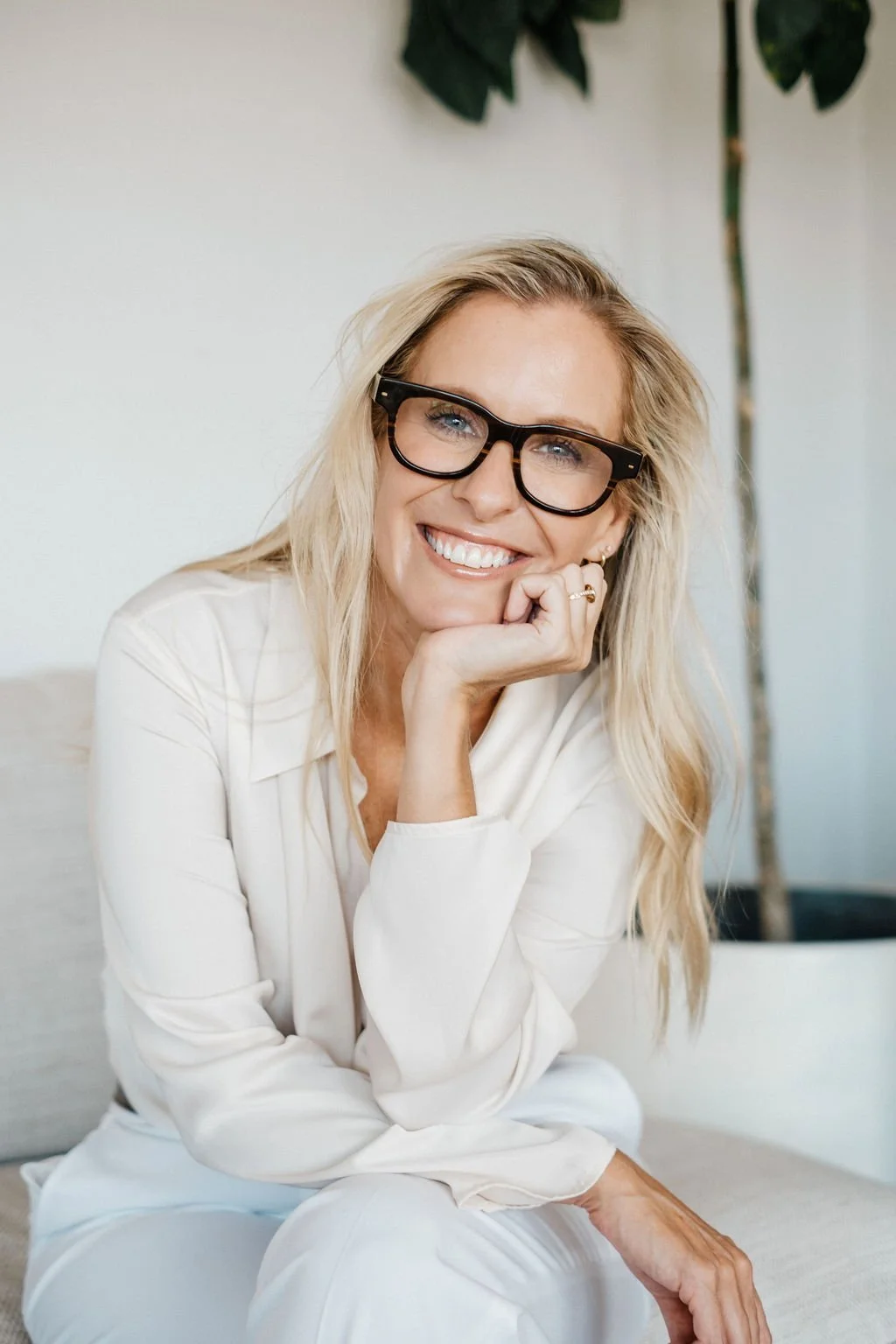
About Claire
I've spent 25 years learning that the best evidence in the room doesn't win.
The story does. Here's how I came to believe it and why I love what I do.
Chapter One
Where it started
A journalist asked a young road safety officer if she was making a difference.
Twenty-five years ago, she said the work was challenging and that she never quite knew whether anything she'd done had reached someone's life, but she hoped that was what she was achieving. That officer was me.
My dad cut the quote out of the local paper and tucked it into the diary he wrote in every single day. I found it again recently. I've spent the quarter-century since trying to answer the question it raised.
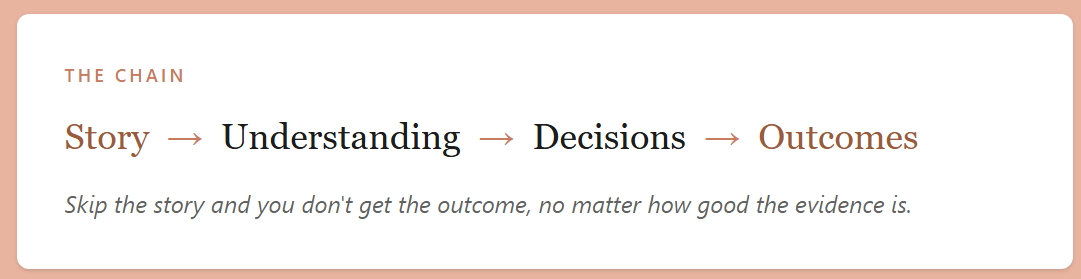
For a long time, I thought the answer was evidence. Build the case well enough, and the right decision follows.
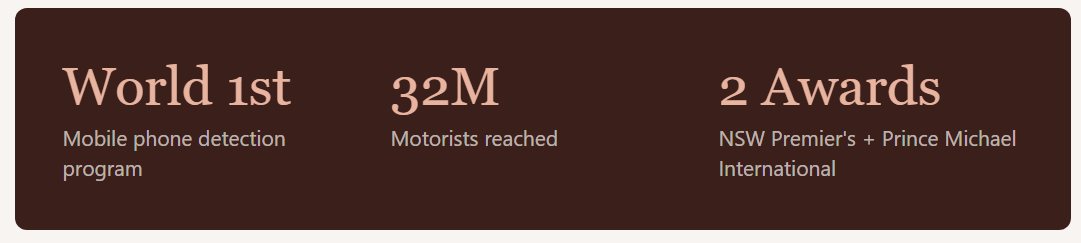
Then I spent years trying to convince a government to do something no country had done: use cameras to detect drivers on their phones. The evidence was overwhelming. The road trauma was real. None of it was enough. What carried the reform was a story people could believe in, defend in public, and build a coalition around to move legislation through parliament.
"I had spent years believing that if the evidence was strong enough, the decision would follow. It almost never does."
Chapter Two
What i worked out
I've watched good work stall my whole career.
A business case that should have been a yes parked. A reform everyone privately agreed with quietly shelved. Smart people, strong data, real stakes, and still nothing moves.
For a long time I read that as bad luck or bad politics. It's neither. It's a translation problem. The evidence never got turned into a narrative the decision-maker could actually use.
We've been drowning decision-makers in crash statistics for decades, and lives lost on our roads keep climbing. The missing link was never better data. It's the narrative that makes the data impossible to ignore.
That's the gap I've spent the second half of my career closing. Not the communications layer you bolt on at the end the story built in from the start: the thing that makes complex evidence understandable, credible, and ready to act on.
"I had spent years believing that if the evidence was strong enough, the decision would follow. It almost never does."
These days I work in three ways all built on the same idea.
Advisory
Reforms too important to stall
Working with governments, organisations, and industry leaders on the work that has to land.
Explore →
Coaching
Bright Side
Coaching subject-matter experts leaving large institutions to build consulting practices of their own.
Explore →
Speaking
The human stakes
Speaking and training on the politics, psychology, and human stakes of getting hard things done.
Explore →

"If you can't tell it,
you can't change it."
— Claire Campbell
Principles
How I think about the work
Four ideas that shape every engagement whether it's a national reform, a board paper, or a single critical conversation.
Start with the decision, not the deck
Every brief begins with the call someone has to make — and what they need to defend it. Working backwards from that changes everything upstream.
Evidence is a raw material, not a finished product
Data doesn't persuade on its own. The job is to translate it into a narrative a minister, board, or executive can carry into the room.
Make the right decision the easy one to defend
Hard reforms stall when leaders can't justify them publicly. Clarity and credibility de-risk the decision before it's made.
Coalitions move legislation; evidence alone doesn't
The work isn't done when the case is built. It's done when enough of the right people can repeat the story in their own words.
Recognition
Awards & appointments
Prince Michael International Road Safety Award
World First, Mobile Phone Detection Camera Program
ARRB National Transport Research Award
Research-Industry Partnership
NSW Premier's Award, Excellence in Digital Innovation
Mobile Phone Detection Camera Program
Transport for NSW Integrity Award
Mobile Phone Detection Camera Program
Victoria Road Safety Camera Commissioner Reference Group
Member, 2024–2026

"Reform happens in the space between what we know and what we're willing to do about it."
Close
Let's change the narrative.
If your work isn't landing, it probably isn't the evidence. It's how the story is being told. That's fixable and it's what I'm here for.
When the stakes are high, the job is to make the smart, safe decision the easy one to defend with clarity and credibility. That's the work.